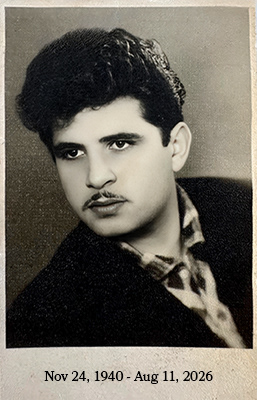
Ask anyone who knew Lev Davidov what he was like, and you will hear the same sentiment: he was a generous spirit with a giving nature. He was a man defined less by what he achieved than by what he gave — his time, his knowledge, his hand in helping someone else find their own way to freedom.
Lev was born in 1940 in Baku, then part of the Soviet Union, into a Jewish community that had learned to practice its faith quietly. Under Soviet rule, Judaism was not illegal so much as it was systematically discouraged. For decades, leaving was nearly impossible. Then, in the late 1970s, a combination of international pressure and quiet, persistent advocacy by American Jewish organizations cracked the door open. Tens of thousands of Soviet Jews began to apply for exit visas. Lev knew this was his chance for a better life.
Lev and his wife, Galina, made that choice for their three young daughters. In late 1978, the family left Baku as part of the wave of Jewish emigration out of the Soviet Union. Like many families of that era, the Davidovs' path wound through Vienna and then Rome, where they waited months in limbo for paperwork and a decision about where in the world they'd be allowed to rebuild — no longer Soviet citizens, not yet American ones, unsure if the life on the other side was worth everything they'd already given up.
For the Davidovs, that life took shape in Detroit, Michigan, where local Jewish humanitarian organizations helped resettle the family as they arrived with almost nothing. Lev did not speak a word of English when he arrived. He took the first job he could find: stock boy at a carpet store. He worked double shifts, catching naps between rolls of carpet on his breaks. It was not a job that matched his intelligence or his ambition, and he did not treat it as beneath him for a single day. He learned fast, worked harder, and rose — from the stockroom to lead sales to District Sales Manager at New York Carpet World, where he helped grow the business into a regional success.
Whatever Lev learned, he taught. Whatever he had, he shared — advice, connections, money when it was needed, his own two hands if it came down to that. But it was in helping others leave the Soviet Union and reach America, through the same painstaking legal channels his own family had once navigated, that Lev's generosity became legend. Friends, extended family, and even strangers who heard his name sought him out, because Lev had already walked the road and knew exactly how to walk it again for someone else. There are people living free lives in this country today — raising children, building careers, becoming grandparents — because of Lev Davidov.
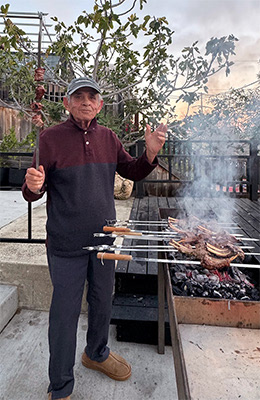
But that’s not the only thing Lev was known for. In the Russian community, he was as celebrated for his shashlik as he was for his big heart, and anyone who spent a summer afternoon at a Davidov barbecue was familiar.
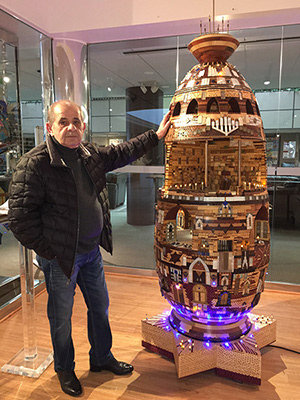
In retirement, Lev found an unexpected creative calling inspired by his artist son-in-law in San Diego. Over five years, working brick by tiny brick with his own hands, he built a seven-foot sculpture, hand-carving elements of Jewish symbolism into a towering, singular tribute to his faith and to the community that had made his American life possible. In January 2016, that sculpture landed Lev on the cover of The Jewish News, a fitting tribute to a man whose gratitude had, quite literally, taken monumental form.
In 2024, Lev and Galina traded Michigan winters for San Diego sunshine, and Lev spent his final years exactly as he deserved to — soaking up the sun, walking daily, and getting loved on by his family. He passed peacefully on August 11, 2026, surrounded by the family he had crossed an ocean and rebuilt a life to protect.
Lev Davidov will be remembered as a devoted husband, father, grandfather, brother, and uncle — a fearless man whose perseverance shaped not just his own life, but the lives of everyone lucky enough to call him family. His family will celebrate his life this November, on his first heavenly birthday.
His sculpture — his brick-by-brick love letter to Judaism and his community — remains a lasting monument to his faith.
He will never be forgotten. His memory, like everything else he built, will live on.